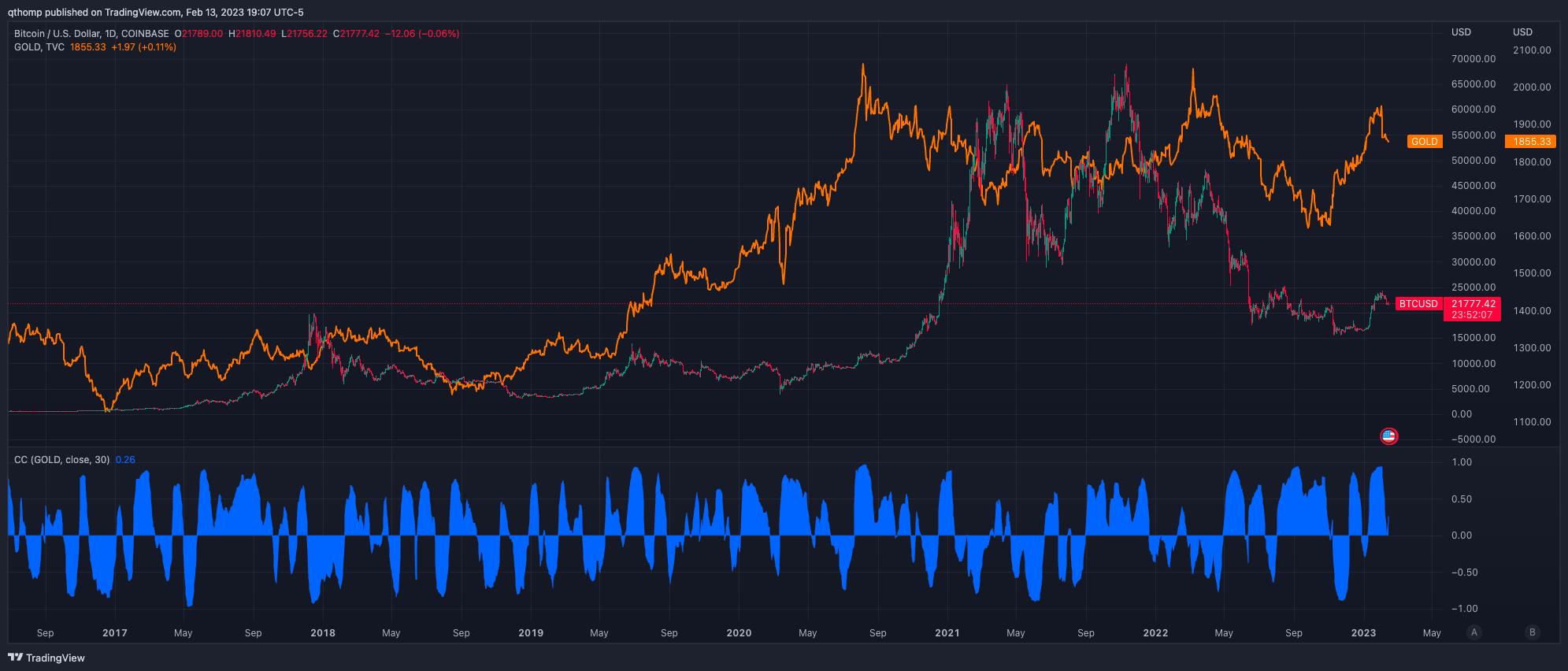

There’s group of people out there who constantly bring up the ‘decoupling’ of crypto from macro. The narrative sounds nice but doesn’t work in practice.
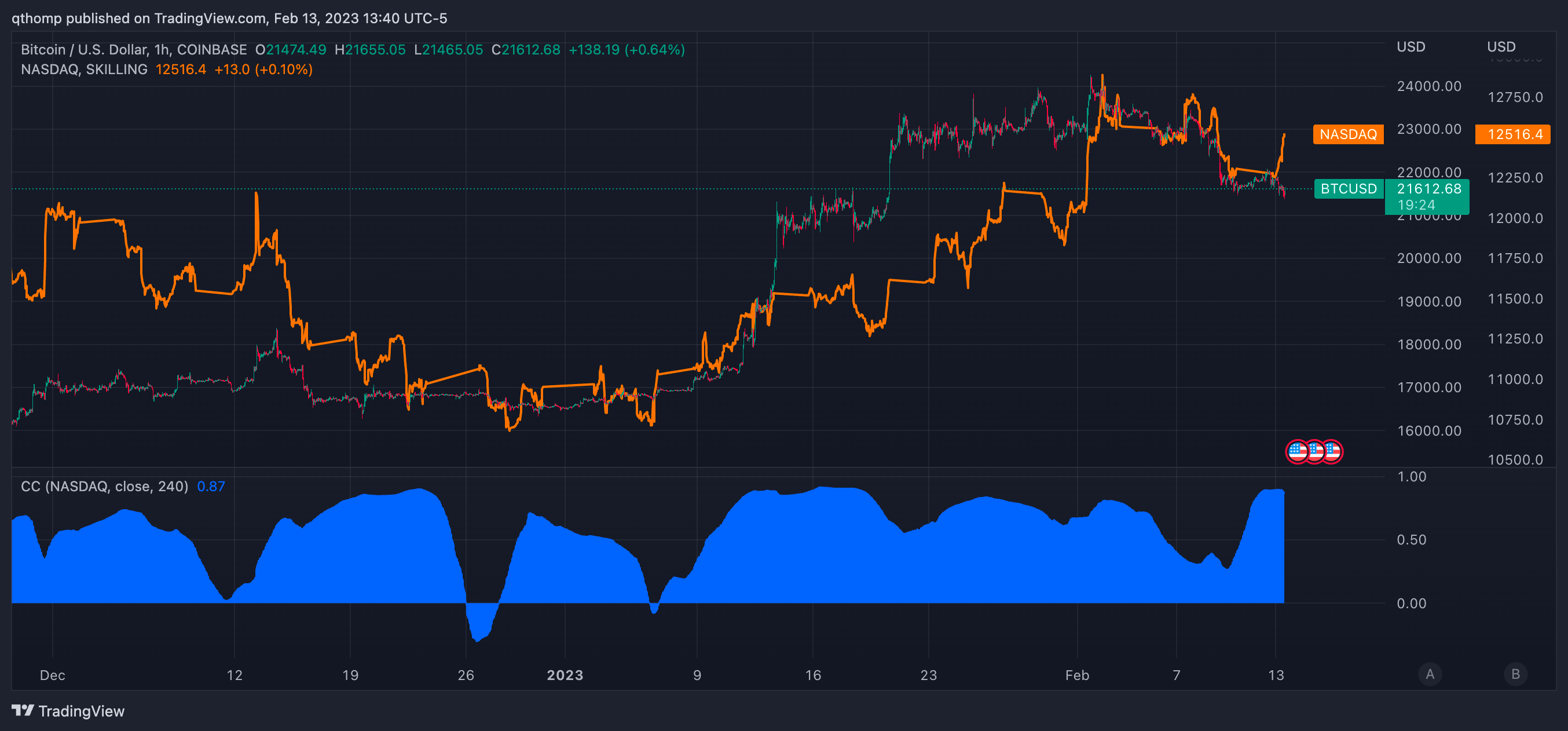
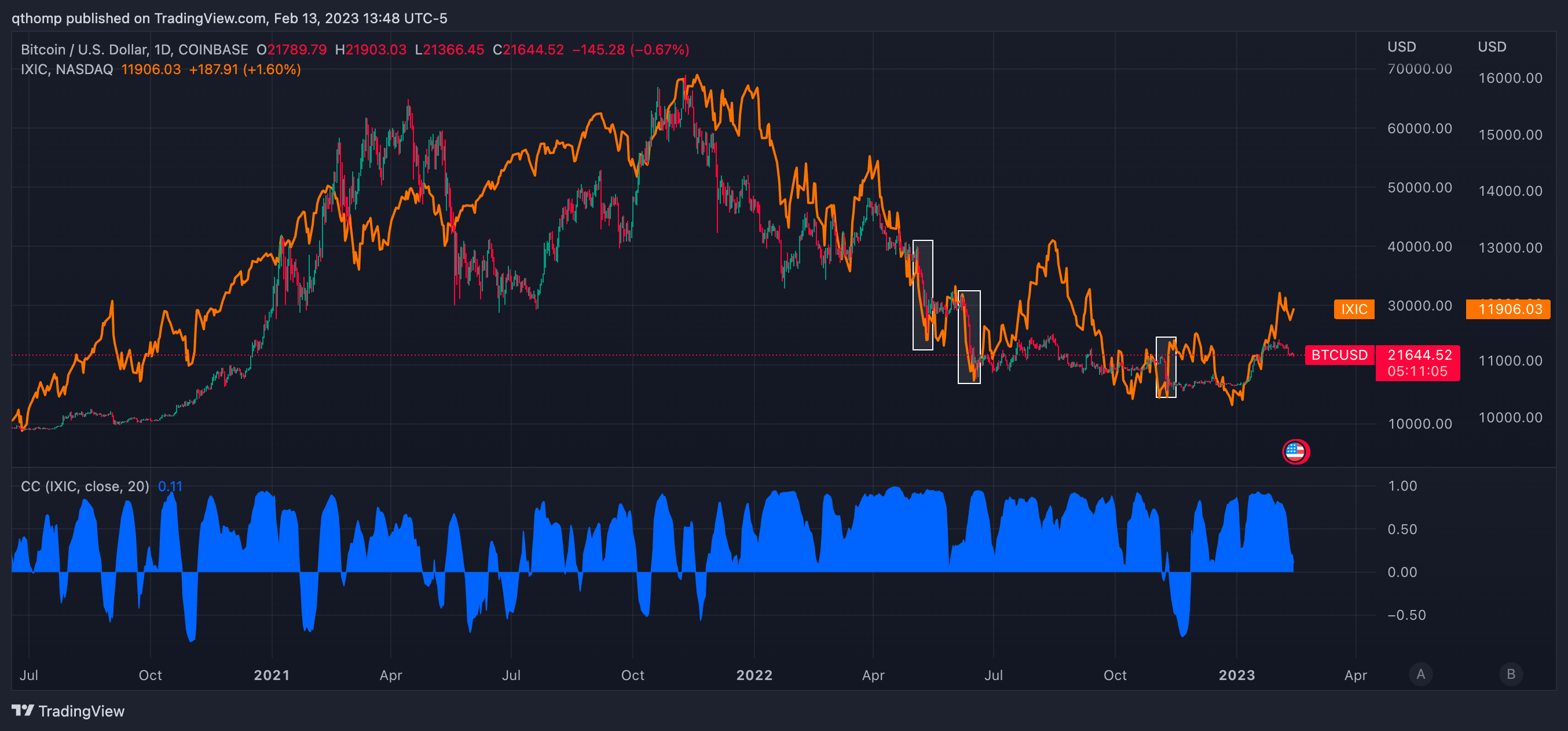
Let’s look at BTC vs. Nasdaq over the past two months - virtual lockstep, with obviously different magnitudes of moves given crypto is higher beta.
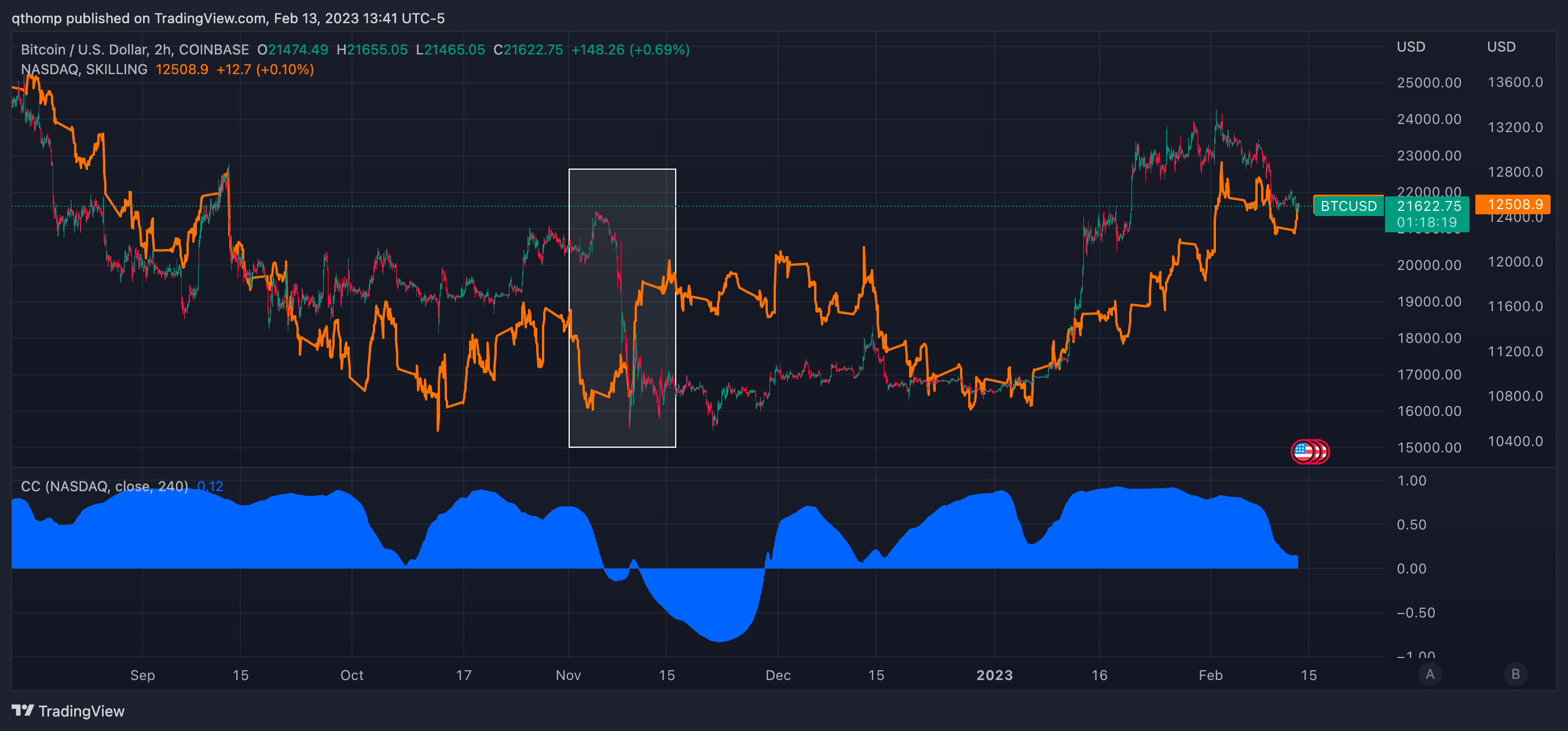
Zooming out further to 6 months tells the same story. Trading in lockstep aside from the days around crypto’s idiosyncratic FTX saga.
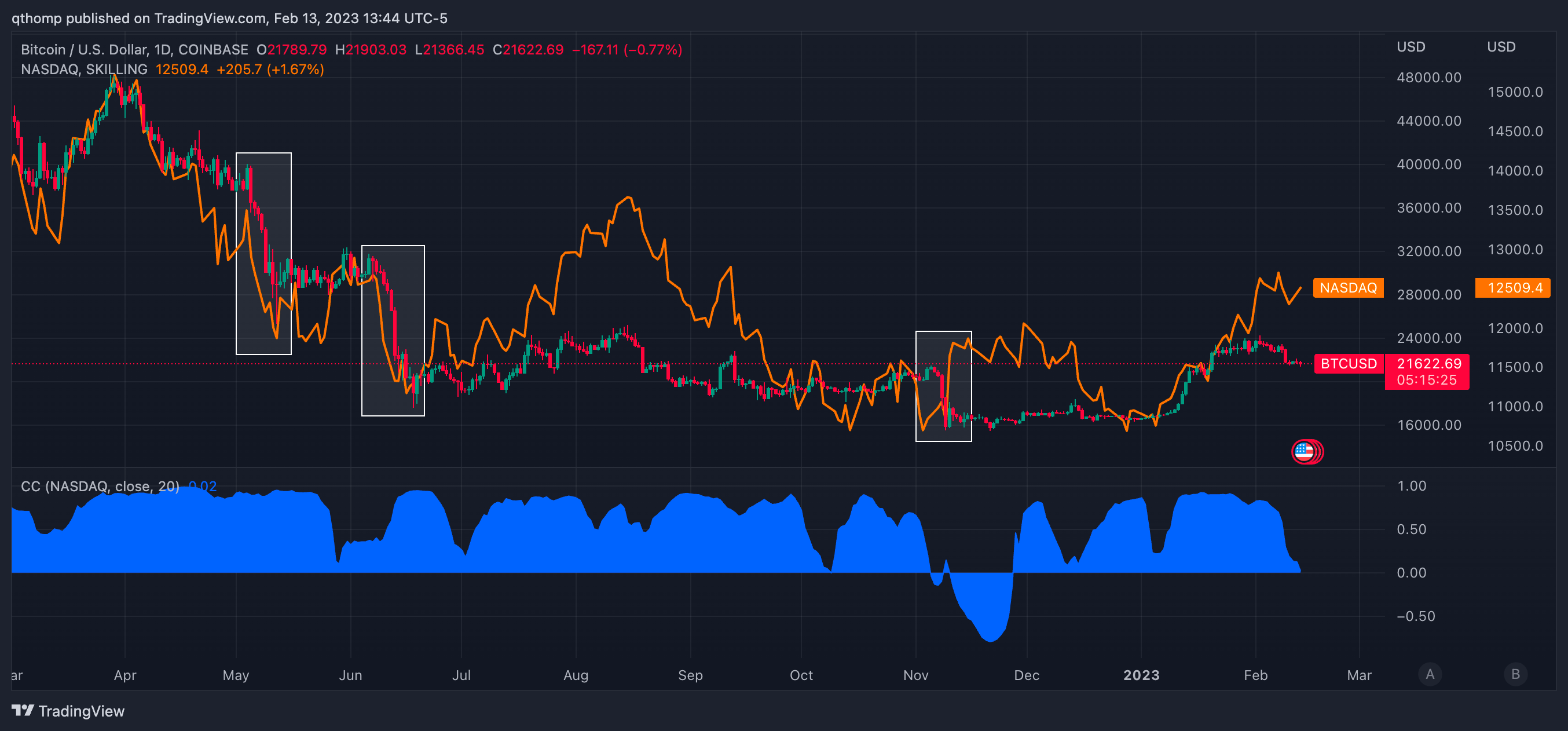
Zooming out a full year we see the same thing. And what’s even more shocking is that the Luna and Celsius meltdowns of May and June coincided with similar moves in the Nasdaq. Correlation or causation? Maybe crypto really isn’t that special?
Zooming out 2+ years, it becomes apparent there was a marked change in late 2021 - the BTC x Nasdaq correlation got much stronger.
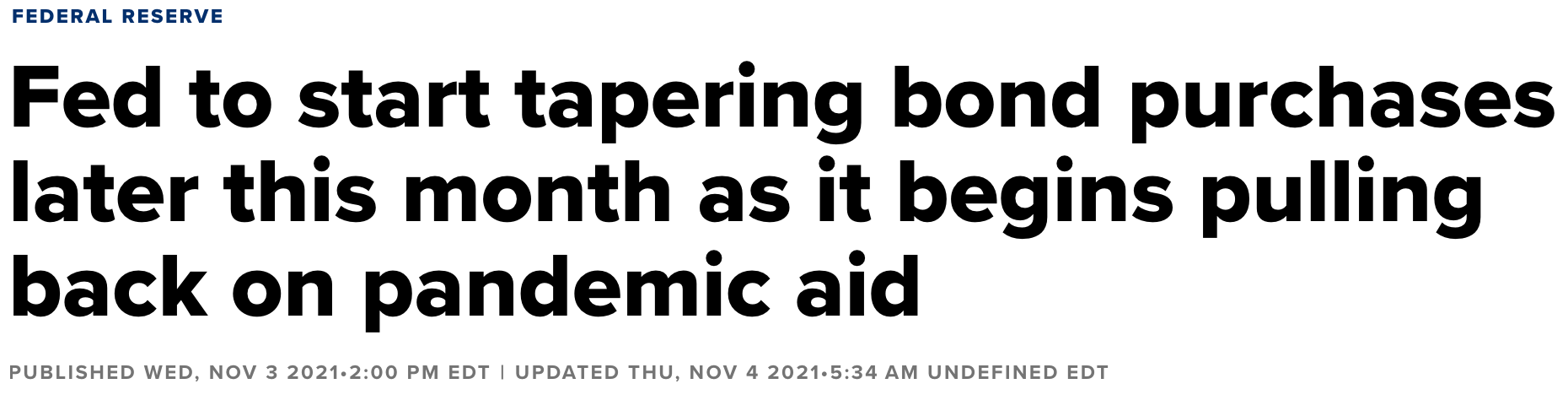
What happened in late 2021? The Fed took it’s foot off the gas.
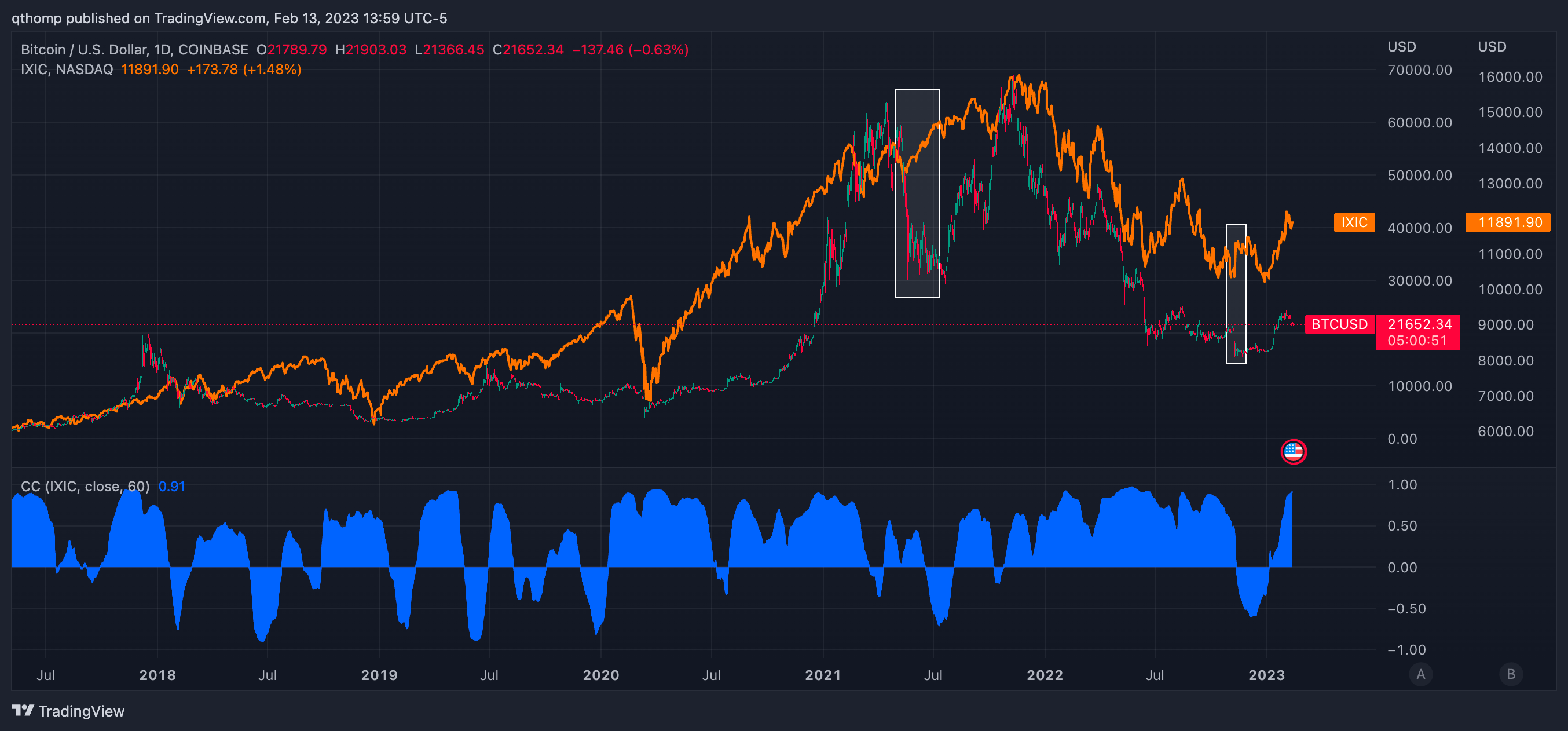
Zooming out further to late 2017, we actually see the trend changed in early 2020. Crypto was somewhat ‘decoupled’ in the years prior but post-COVID became the same exact trade as the Nasdaq, just higher beta. The two large divergences in correlation were the China mining ban in May 2021 and the FTX collapse in November 2022. Given those types of idiosyncratic risk, makes sense why it is higher beta.
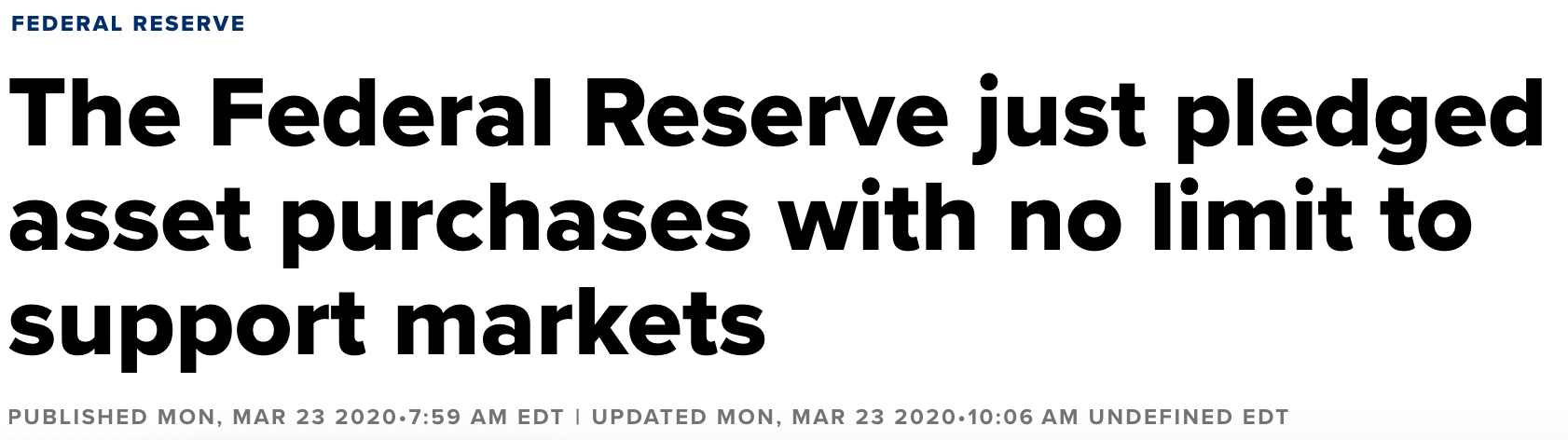
And what exactly happened in early 2020? The Fed’s unlimited QE began.
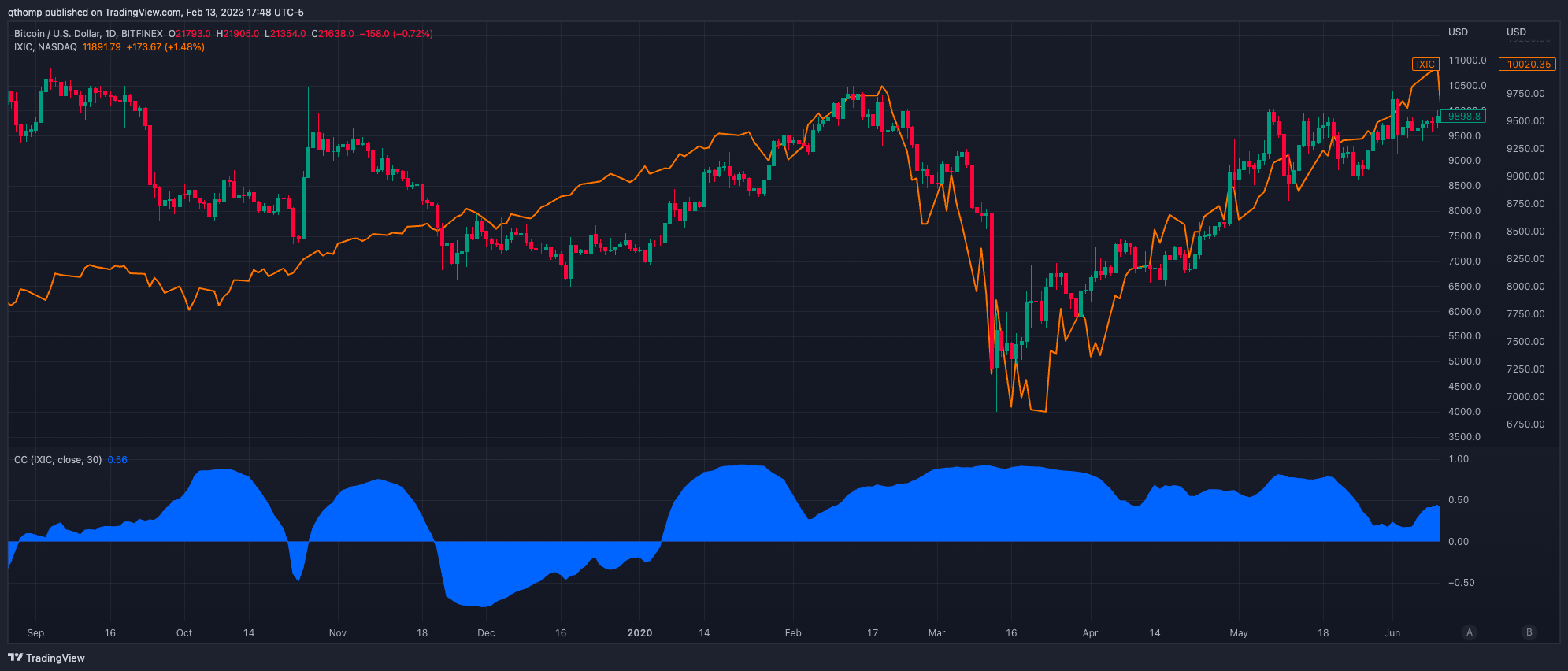
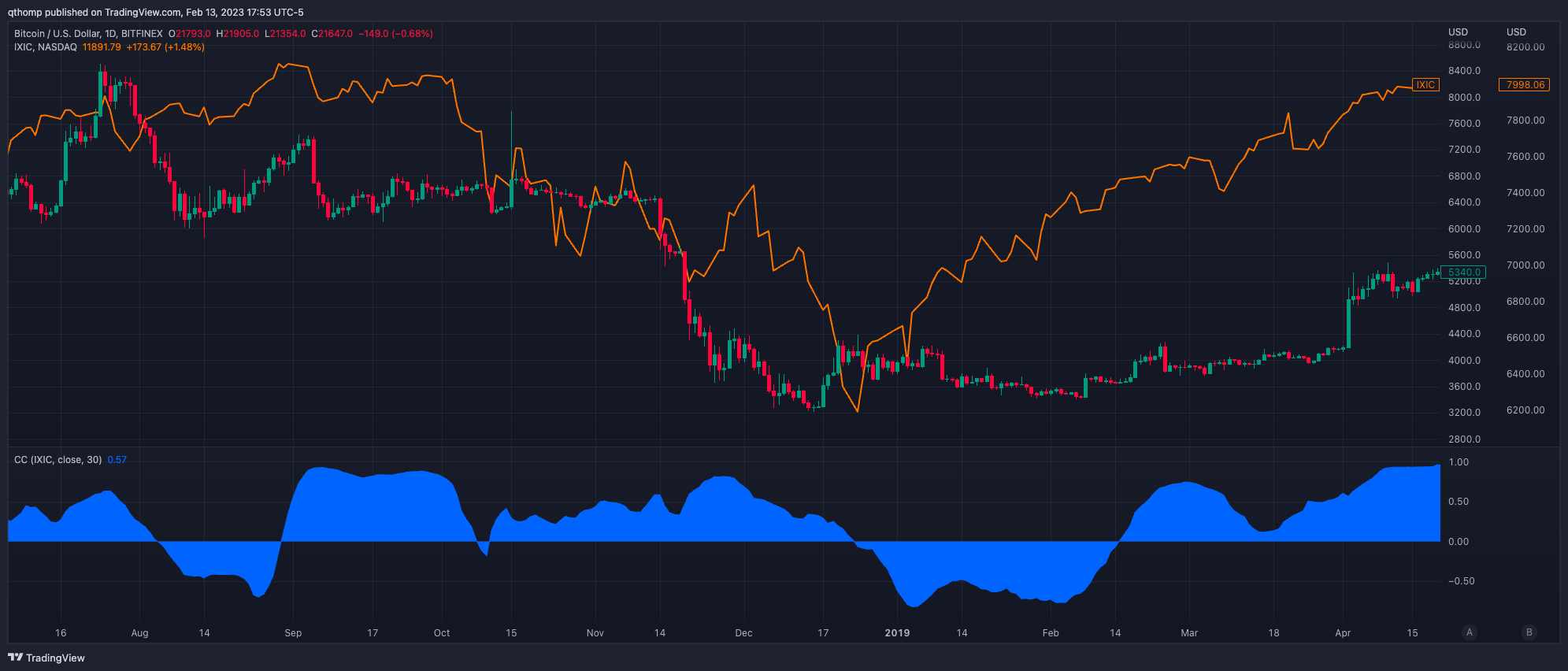
Looking back at previous cycles, crypto has historically sold off before other risk during negative macro events (Dec '18, Mar '20) and also ticked the bottom 1-2 weeks before equities.
Prior to the 2020 COVID crash, BTC peaked on Thursday, February 13th and the Nasdaq peaked on Wednesday, February 19th. Bitcoin bottomed Friday, March 13th, while the Nasdaq bottomed Monday, March 23rd.
During the Q4 2018 sell off on the back of global slowdown concerns, crypto was 12 months into its bear market winter. Bitcoin bottomed on Saturday, December 15th while Nasdaq bottomed on Monday, December 24th.
There’s a school of thought that says as crypto scales into a larger capitalization, it will decouple. This is likely false. As the industry grows, its adoption will increase to a point where it has permeated through the rest of the economy. Similar to tech from early 2000’s to today where every business has a technology component. As evidenced, the technology has become the economy and trades in lockstep with broader risk assets. The same evolution should hold true for crypto and digital assets. As digital asset businesses mature and become profitable, they will be dependent on the same economic forces driving other industries and trade in such a way. This trend has played out thus far as evidenced by Bitcoin becoming more correlated to Nasdaq over the past two years, as opposed to less.
The caveat to denote is in the case of Bitcoin. The ultimate use case for Bitcoin is a bit TBD (as it is for many of these nascent technologies), however the digital gold analogy gives it different characteristics than other digital assets like Ethereum. If Bitcoin is able to mature in such a way it becomes viewed as a globally recognized store of value or decentralized money, it would trade more akin to gold which historically carries less volatility. Within the digital asset ecosystem, if you view Bitcoin like digital gold and Ethereum like a decentralized app store, then yes these assets will decouple on a relative basis over time. That should happen over a long enough horizon.
The potential catalyst I see for the ‘decouple’ crowd is that because Bitcoin is the largest digital asset and many people outside of the industry still categorize crypto as Bitcoin, the profitability and sustainability of the rest of the ecosystem rely on it. That is to say, if Bitcoin were to begin trading like gold and perform well even in the case of an economic downturn, that rising tide would lift all boats within digital assets. A higher Bitcoin price leads to more capital inflows, further investment in other areas of the space and a renewed attention towards it. In the long run, with enough growth these other digital assets and businesses would mature and become correlated with broader risk assets again. However these events take years to play out and shorter cycles can rotate within broader secular trends.
Ultimately it does not appear we are close to that scenario though as there are no signs that Bitcoin trades with gold. Crypto is still too nascent of an industry and is viewed first and foremost as a long-tail technology asset.